
Why ailix
Three things that set ailix apart
For two hospitals that speak different languages to care for one patient together, the terms must match, names in records must be masked, and the data must be exportable in a standard format.
Medical dictionary
Medical terms in 12 languages share one set of concepts
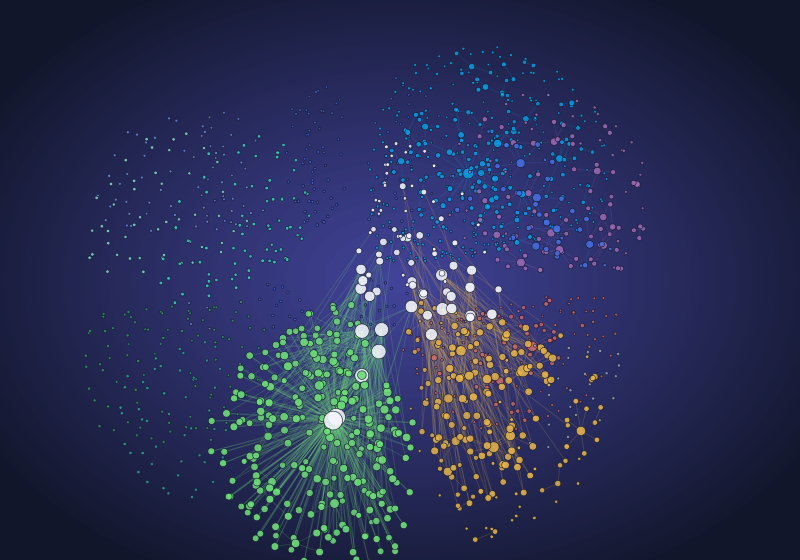
ailix Codex is a medical dictionary (an ontology) of 1,651 concepts in 19 fields, from diagnoses and drugs to tests and units. Every document translation and session interpretation uses its terms.
- One term, however each hospital writes it
- Each concept has a preferred name in 12 languages. 24,082 synonyms and abbreviations, and even letters misread by OCR, lead to the same concept, so records worded differently at each hospital translate to the same term. Some concepts are paired with international standard codes.
- Risky mistranslations flagged first
- Numbers, doses, units, negations and drug names in a translation are checked against the source and marked as risk, caution or normal, so clinicians know where to look first.
- Only tested and approved changes
- Every term added or changed is tested again on 3,160 evaluation items. Only changes that pass and that an administrator approves are used in later translations and interpretations.
Privacy
Names are masked before records are translated
Patient identifiers and clinical data are stored apart from the start. Medical records and session summaries reach translation services only with names masked. Data is stored in the Seoul region of the Republic of Korea, and automatic processing takes place in the countries the patient consented to.
- Names masked before translation
- Medical records, opinions and session summaries reach translation services only after names, dates of birth and contact details are masked. Real patient data goes only to engines contracted not to keep it or train on it.
- Seen only by those in the consultation
- Hospitals asked to review a case see the records with names masked until they accept. Names and contact details open only to the hospital the referring side chooses, and inside a hospital only the assigned doctor and staff can open them. Hospital users sign in with two-factor authentication, and who did what and when is recorded without content and kept for five years in a form that cannot be deleted.
- Identity kept apart and encrypted
- Patient identity data is kept apart from clinical data, with its own database, account and encryption key, linked only by random pseudonymous IDs. Data is encrypted in transit and at rest, and personal data once more at field level.
- Original recordWith identifiers
- MaskingNames, dates of birth, contacts
- translation serviceNo retention or training (by contract)
- Encrypted storageSeoul region · AWS KMS
Linked only by pseudonymous IDs
Hospital system integration
Standards for clinical records, medical images and research data
Consultation data can be read as HL7 FHIR R4 (4.0.1) resources and exported as a Bundle. The home hospital, which may see identifiers, receives the KR Core 2.0.0 Patient profile; a partner hospital receives patient details without identifiers. Bridge also has conversion modules for medical images in DICOM and research data in OMOP CDM.
- Only what the doctor confirmed
- Diagnoses, tests, prescriptions and session summaries are exported only in the version a doctor confirmed. On confirmation, codes and units are checked again against ailix Codex, and the confirming doctor, the time and any corrections are kept.
- Bridge connectors and DICOM images
- ailix Bridge separates standard conversion from hospital-specific connectors. Its modules validate DICOM medical images and convert JPG and PNG images to DICOM. EMR and image archive (PACS) integration follows the receiving system’s formats, permissions and exchange testing.
- Research data in OMOP CDM
- A conversion module arranges diagnoses, drugs and tests in common tables and codes for research. Its use follows the research purpose, consent scope and reviewed code mappings.
{"resourceType": "Bundle","type": "collection","entry": [{ "resource": { "resourceType": "Patient","meta": { "profile": ["http://www.hl7korea.or.kr/fhir/krcore/StructureDefinition/krcore-patient|2.0.0" ] } } },{ "resource": { "resourceType": "Condition","code": { "coding": [{ "system": "http://hl7.org/fhir/sid/icd-10", "code": "I10" }] },"verificationStatus": { "coding": [{ "code": "provisional" }] } } },{ "resource": { "resourceType": "Observation","code": { "coding": [{ "system": "http://loinc.org", "code": "718-7" }] },"valueQuantity": { "value": 128.125, "system": "http://unitsofmeasure.org", "code": "g/L" } } },{ "resource": { "resourceType": "Provenance", … } }]}Automatic translation and interpretation support clinical judgment. They do not make a diagnosis.